Showing posts with label journal of diabetes research impact factor. Show all posts

Friday, December 3, 2021

Lupine Publishers| Properties of Mitochondrial-Derived Peptides (Mdps), Type 2 Diabetes, and Relationship with Oxidative Stress

 Lupine Publishers| Journal of Diabetes and Obesity


Abstract

Objective: In addition to its role in energy production and metabolism, mitochondria play a major role in apoptosis, oxidative stress, and calcium homeostasis. This review highlights the intricate role of mitochondria derived peptides (MPs), oxidative stress, and age-related disease such as diabetes.

Key Findings: The mitochondria produce MDPs: specific peptides that mediate transcriptional stress response by its translocation into the nucleus and interaction with DNA. MDPs are regulators of metabolism with cytoprotective effects through anti-oxidative stress, anti-inflammatory responses and anti-apoptosis. This class of peptides comprises: humanin (HN), MOTS-c, Small HN-like peptides. HN inhibits mitochondrial complex 1 activity and limits oxidative stress level in the cell. HN has been shown to prevent apoptosis by decreasing the reactive oxygen species production. Mitochondrial dysfunction and oxidative stress are implicated in the pathogenesis of diabetes. Data suggested that MDPs had a role in improving type 2 diabetes (T2D).

Summary: The goal of this review is to discuss the newly emerging functions of MDPs and their biological role in ageing and age-related diseases such as T2D.

Keywords:Mitochondrial-Derived-Peptides; Humanin; Oxidative Stress; Diabetes

Introduction

Mitochondria play a critical role in maintaining cellular function by ATP production. In addition to its role in energy production and metabolism, mitochondria play a major role in apoptosis, oxidative stress, and calcium homeostasis. A mitochondrial stress signal, or a ‘mitokine’, could confer protection and promote survival, while priming the cell’s readiness for subsequent insults with increasing severity. The term ‘mitohormesis’ for such a phenomenon has been created [1]. The mitochondrial unfolded protein response (UPRmt) is a central part of the “mitohormetic” response. The UPRmt may be an alternative way in relationship with mitochondria signal in the cell. The mitochondria produce some specific peptides that mediate transcriptional stress response by the translocation into the nucleus and interaction with DNA. Mitochondrial derived peptides (MDPs) are regulators of metabolism and various studies have shown that MDPs exerted cytoprotective effects through anti-oxidative stress, anti-inflammatory responses and anti-apoptosis [2,3]. The goal of this review is to discuss the newly emerging functions of MDPs and their biological role in ageing and metabolic diseases such as T2D.

Mitochondrial Metabolism Modulation

Functions in the Mitonuclear Communication Pathways

Mitochondria booked a portion of the original bacterial genomes that co-evolved with nuclear genome. However, mitochondria import over a thousand proteins encoded in the nuclear genome to maintain their diverse functions, reflecting their adjacent relationship [4].

The mitochondrial genome inherits bacterial-like traits: the DNA molecules (mtDNA) are circular, double stranded, small (16,569 nucleotides in humans) and compact. mtDNA contains 37 genes, including 22 tRNAs, 2 rRNAs (12S and 16S rRNA) and 13 mRNAs encoding the proteins of the electron transport chain [5]. The mtDNA has no introns but a few non-coding nucleotides between adjacent genes and small open reading frames that encode functional MDPs. This class of peptides comprises humanin (HN) and mitochondrial open reading frame of the 12S rRNA-c (MOTS-c) and expands the expression of mitochondrial proteome [6]. It has been established that mitochondria can export peptides and also import cytosolic peptides. It is the class of “cell-penetrating peptides” designed also as “mitochondrial cell-penetrating peptides” [7]. Many age-induced processes and degenerative diseases are related to mitochondrial dysfunction, further highlighting the critical importance of this organelle [8]. Complex human diseases, including diabetes, obesity, fatty liver disease and aging-related degenerative diseases are associated with alterations in mitochondrial oxidative phosphorylation (OXPHOS) function.

Overview on Concepts of Retrograde Signaling and Unfolded Protein

Numerous implications of these anterograde and retrograde signaling pathways between the mitochondria and the nucleus are appropriate for therapeutic exploitation with bioactive molecules.

Concept of Retrograde Signaling

The hallmark of mitochondrial retrograde signaling is the modification of the expression of nuclear genes induced by a signal from mitochondria [9]. Retrograde signaling must be triggered by a mitochondrial signal that in turn is relayed via molecules that finally reach the nucleus. In mammalian cells, altered nuclear expression in response to mitochondrial dysfunction is reported; a number of signaling pathways being implicated in this retrograde communication [10]. Mitochondrial retrograde signaling is a signaling pathway connecting mitochondria and the nucleus. Signal transducers in the yeast retrograde response are Rtg1p, Rtg2p, and Rtg3p proteins [11]. The outcomes of mitochondrial retrograde signaling go far beyond the maintenance or biogenesis of the organelle, affecting the homeostasis of the whole organism through body weight or immunity.

Concept of Unfolded Protein

Mitochondrial protein homeostasis is maintained through proper folding and assembly of newly translated polypeptides. Several factors challenge the mitochondrial protein-folding environment including reactive oxygen species (ROS) that are generated within mitochondria, as well as environmental situations such as exposure to toxic compounds. To promote efficient mitochondrial protein folding mitochondria possess molecular chaperones located in both the intermembrane space and matrix [12].

UPRmt is a mitochondria-to-nuclear communication mechanism that promotes adaptive regulation of nuclear genes related to mitochondrial response, and metabolism, implicated in the cellular homeostasis [13].

Mitochondrial-Derived Peptides: Classification

MDPs are a series of peptides encoded by mitochondrial DNA. This class of peptides comprises HN, MOTS-c, Small HN-like peptides (SHLPs) and expands the expression of mitochondrial proteome [6].

Humanin

The first MDP discovered back in 2001 was HN; the term based on the potential of this peptide for restoring the “humanity” of Alzheimer’s disease (AD) patients. HN promotes cell survival in response to a variety of insults.
It is a small, secreted, 24 or 21 amino acid peptide, depending on cytoplasmic or mitochondrial translation, respectively. If HN is translated within the mitochondria, the peptide will be 21 amino acids; and if it is translated in the cytoplasm, then the result is a 24 amino acid peptide [14]. HN is encoded by an HN open reading frame (ORF) within the gene for the 16S ribosomal subunit within the mitochondrial genome [15]. HN was discovered during a search for survival factors in unaffected areas of an AD patient’s brain. The initial studies were first performed in cell culture and then followed by in vivo studies using both pharmacological mimetics of AD as well as mutant gene: amyloid-β precursor protein. The most recent studies used transgenic models of AD. As HN is a relatively short peptide, exhaustive mutational analysis of the importance of each amino acid has been possible. Interestingly, single amino acid substitutions of HN can lead to significant alterations in its potency and biologic functions. S14G-HN in which the serine at position 14 is replaced by glycine, is a highly potent analogue of HN.
Finally, HN may be the first small peptide of its kind representing a putative set of MDPs, a novel concept that modifies the established concept about retrograde mitochondrial signaling as well as mitochondrial gene expression. HN is a neuroprotective peptide and a cytoprotective factor against oxidative stress [16].

Mitochondrial Open Reading Frame of the 12S rRNA-c ( MOTS-c)

In addition to HN, an in-silico search of the mitochondrial genome revealed additional potential MDPs. MOTS-c is expressed in various tissues and in circulation (plasma) in rodents and humans, suggesting both a cell-autonomous and hormonal role. Its primary target organ appears to be skeletal muscle and fat. The mitochondrially derived peptide MOTS-c was recently discovered. It is a 16 amino acid peptide located in the 12S rRNA gene. The first 11 amino acid residues of MOTS-c are highly conserved in 14 mammalian species [17]. MOTS-c has been identified as a gene expression regulator in the nucleus, leading to retrograde signaling via its interaction with transcription factors. MOTS-c polymorphism has been found to be associated with human longevity [18]. MOTS-c can prevent insulin resistance, dietmediated obesity, and ameliorate diabetes. MOTS-c oxidizes fatty acids and inhibits oxidative respiration [19]. MOTS-c increased the levels of carnitine metabolism, which transport activated fatty acids into the mitochondria for β-oxidation, increased the level of a β-oxidation intermediate. MOTS-c inhibited the folate cycle at the level of 5Me-THF, resulting in an accumulation of 5-aminoimidazole- 4-carboxamide ribonucleotide, an AMP-activated protein kinase (AMPK) activator. MOTS-c also increased cellular NAD+ levels, which are nucleotide precursors [17,20]. MOTS-c regulated a broad range of genes in response to glucose restriction, including those with antioxidant response elements (ARE), and interacted with ARE-regulating stress-responsive transcription factors [21].

Small HN-like Peptides

Recently, six additional peptides encoded within the mitochondrial 16S rRNA region of mtDNA have been discovered and designed as SHLP1-6. SHLP2 and SHLP3 share similar biological effects with HN. The circulating levels of MOTS-c and SHLP2 decline with age. Various studies suggest that SHLP2 and SHLP3 may participate in the pathogenesis of age-related neurodegenerative diseases. The anti-oxidative stress function of SHLP2, and its neuroprotective effect indicate that SHLP2 has a role in the regulation of aging and age-related diseases [5].

Ageing and Plasma MDPs Levels

Ageing and longevity are or are not characterized by high levels of MDPs? It is speculated that MDPs production turns from protective to detrimental adaptive response; in these conditions, the levels increasing during aging. In some studies, HN levels significantly decline with age in humans. Plasma HN level was significantly lower in the older group (1.3 ± 0.2 ng/mL) than that of the younger group (1.7 ± 0.1 ng/mL) [22]. In other studies, it is reported that HN levels significantly decline with age in humans and animals. HN levels in plasma were measured in young and old mice and across age in humans. HN levels decreased with age in both mice and human (Human plasma levels: 45-65 years: 1400 pg/mL; 80-110 years: 1000 pg/mL) [5].


New results are in contrast with these data. HN plasma levels are evaluated in 693 subjects aged from 21 to 113 years. HN levels increased in old age (>500 pg/mL), with the highest levels found in centenarians (> 1000 pg/mL). The plasmatic levels of HN are significantly positively correlated with age. No gender differences were observed for HN. HN plasma level is associated negatively with body mass index in elderly patients [23]. Concerning the other MDPs, it is reported that MOTS-c and SHLP2 circulating levels decline with age. The circulating SHLP2 levels significantly decreased with age in both male and female C57BL/6 mice (young, 3 months old: 3000 pg/mL; aged, 18 months old: 2500 pg/mL). Male mice had higher SHLP2 levels than female mice in both the young and old groups [5]. The results of these studies should be interpreted considering the following limitations. First, the relatively small sample size in each group represents a potential limitation. Second, mitochondrial diseases are an expanding group of disorders with many metabolic deficiencies. In the ideal case, the used patient cohort should display a homogeneous phenotype, disease stage, and organ specificity. Moreover, the discovery of ageing-related biomarkers is supported by the development of advanced proteomics technology. Changes in the circulating concentrations of human proteins can serve as predictive measures of health and disease [24].

Read More Lupine Publishers Diabetes and Obesity Journal Articles: https://diabetes-obesity-lupine-publishers.blogspot.com/

Thursday, September 3, 2020

Lupine Publishers| Archives of Diabetes and Obesity

Lupine Publishers- Carbohydrates for Diabetes?


Opinion
Would you like a piece of bakes potatoes? NOOOO, I am Diabetic. An answer that we usually face with people with Diabetes Type Two. And mostly whenever we ask them who told you that you are not allowed to eat carbohydrates, the answer is our Endocrinologist! As Clinical Dietitian, I am facing this case on daily basis average. Now, let me tell you that this is not the way. Diabetes type two diets should contain 45-50% of Carbohydrates Does this mean that 50% of my food can be from chocolates and candies? Neither this is the case. Another question to be added: Does this diet help with Obesity? The answer is YES! There are a lot of weight loss diets that are rounding in the field these days. As per my experience, the Diabetes Diet is the only diet that help in weight loss and in the same time to be continued as a healthy lifestyle. (NOTE: in case no other health complications and other Therapeutic diets to be followed).

For a 2000 kcal daily intake, this balanced diet consists of
a) Carbohydrates (45-50%): an average of 8 servings of Carbohydrates per day coming from whole grains, 4 servings of fruits ,6 servings of vegetables and 2 servings of low-fat milk. These foods are good source of vitamins, minerals, dietary fibers and energy.

b) Proteins (10- 20%): an average of 8 servings of Meat of which 80% coming from Lean protein like cottage cheese, skinless chicken) and plant-based sources like legumes (noting that legumes have carbohydrates along with proteins to be counted and managed).

c) Fats (25-35% ): these fats on average of 5 servings where trans-fat (like margarines and spreadable ) should be eliminated and saturated fats to be less than 7% (like chicken skin) and the best sources to come from raw olive oil , nuts and fish to be taken three times per week to get the needed Omega

d) Alcohol: one to two drinks per day, 15 to 30 g of alcohol are associated with decreased risk of coronary heart disease. However, these to be considered an addition to the regular food and manage Carbohydrates servings instead.

So, having Breakfast, Lunch, Dinner and two snacks between the three meals will help to keep a balanced diet and full throughout the day with adequate amounts of liquids to stay hydrated. Now, how can I manage Obesity with this diet? Starting with the Total Energy Expenditure, we start by reducing the Energy Intake by 500 kcal per day. As a result, losing 2.2 pounds per week or 9 pounds per month as an average. Although usually as start of this diet and changing the lifestyle into healthier one and quitting bad habits, we see more weight loss in less time. Along with time, and when weight loss takes place, the Energy Expenditure of the body decreases. And the body gets accustomed to the amount of Energy Intake. In this case, we continue the Energy Intake reduction, so the weight loss continues! Adding physical activity is a big benefit that will help in weight loss and later body weight maintenance. When Diabetes type two can be managed by Diet, why to suffer from its short- or long-term complications? Why to take medications and suffer their side effects when you can manage it by healthy lifestyle! Stay Healthy and Happier.

NOTE: Diet is always customized as per every person’s case.

For more Lupine Publishers Open Access Journals Please visit our website:
http://lupinepublishers.us/

For more Open Access Journal on diabetes and Obesity articles Please Click Here:
https://lupinepublishers.com/diabetes-obesity-journal/

To Know More About Open Access Publishers Please Click on Lupine Publishers

Follow on Twitter   :  https://twitter.com/lupine_online

Follow on Blogger : https://lupinepublishers.blogspot.com/

Friday, February 28, 2020

Lupine Publishers| New Clinical Initiatives at the Steno Diabetes Center Odense and in the Region of Southern Denmark

Abstract

In general, patients with diabetes still have an increased mortality risk, increased risk of micro- and macro-vascular complications and a decreased quality of life. Despite better options for treatment and care, to many diabetes patients are still not in optimized treatment control in order to avoid complications. In Denmark there is a long tradition for focused diabetes treatment and care, as well as research and manufacturing insulin and other antihyperglycemic drugs. Five Steno Diabetes Centers, one in each region of Denmark, have emerged as a part of the Danish Health Care System. The overall aim for these centers is to provide optimized treatment and care for all patients with diabetes regardless of age, type of diabetes, co-morbidity and where in the Health Care System the patient is treated. The vision is to provide treatment, research and education at the highest international level in the future. Steno Diabetes Center Odense is a new diabetes center which will attempt to realize this aim and vision for patients with diabetes and health care professionals in the Region of Southern Denmark. In this paper we describe the present and forthcoming new clinical initiatives at Steno Diabetes Center Odense and at its partner hospitals in the Region of Southern Denmark, which is planned or in the process of implementation.

Introduction

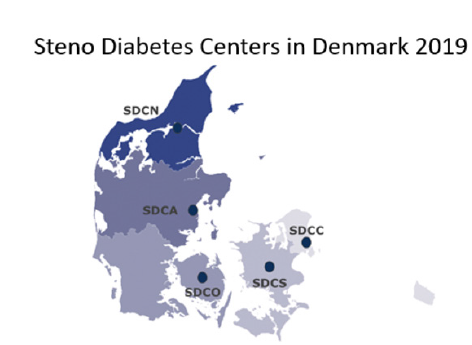
The Danish physician Hans Christian Hagedorn (1888-1971) initiated the industrial production of insulin in Denmark in 1923 together with the Danish physiologist August Krogh (1874-1949) by founding the company Nordisk Insulin Laboratorium, which much later merged into the pharmaceutical company Novo Nordisk A/S [1]. Further in 1936, Hans Christian Hagedorn co-discovered the principle of addition of protamine to insulin, in order to protract its time of action [2]. This principle has been marketed and in use since 1946, known as Neutral Protamine Hagedorn insulin (NPH insulin). The initial idea of Nordisk Insulin Laboratorium was to ensure the availability of insulin for the patients, and to support research, treatment and care of patients with diabetes. Thus, Hans Christian Hagedorn founded Steno Memorial Hospital in 1932, a private-based hospital solely for treatment and care of patients with diabetes. In 2017, Steno Memorial Hospital, now called Steno Diabetes Center Copenhagen, was entrusted from Novo Nordisk A/S to the National Danish Health Care System, for future treatment and care of patients with diabetes in the Capital Region of Denmark. At the same time, the Novo Nordisk Foundation granted a donation of approximately 1 billion euros to support the foundation and development of similar Steno Diabetes Centers in the other four regions of Denmark, thus covering the entire Denmark with specialized centers within prevention, treatment, care and research in diabetes. During 2018, four diabetes centers have been formed: Steno Diabetes Center Odense (SDCO), Steno Diabetes Center Århus (SDCA), Steno Diabetes Center of Northern Jutland (SDCN) and Steno Diabetes Center Zeeland (SDCS)(Figure 1). All centers are attached to general hospitals in which most other specialties are present. The grant from the Novo Nordisk Foundation also covers new buildings, which will be built and specially designed to future management of diabetes care and treatment, comprising treatment of both children and adults, in addition to diabetes research and education of health care professionals.
Figure 1:
lupinepublishers-openaccess-journal-diabetes-obesity

Steno Diabetes Center Odense

SDCO was founded January 1st, 2018 and is currently taking care of approximately 3200 patients with all kinds of diabetes. The four core activities of SDCO are: prevention and treatment of diabetic complications, clinical research, education of health care professionals and cross-sectorial collaboration between the different health care sectors. The overall aim is to provide the highest international level of treatment, care and research within diabetes, in order to give patients with diabetes in the future a lifespan and quality of life not different from the population without diabetes. SDCO will have the overall responsibility for the quality and treatment and care of patients with diabetes for the whole diabetes population of the Region of Southern Denmark, which is currently approximately 56.000 patients with diabetes [3], regardless of where the individual patient is treated (hospitals, outpatient clinics, primary health care providers etc).
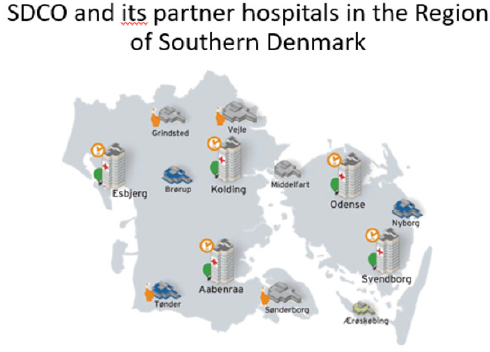
To obtain the goal of ensuing and increasing the quality of patient care and treatment a close collaboration between SDCO, SDCO partner hospitals, communities and primary health care providers has to be reinforced and further developed (Figure 2). In addition to current standard treatment of patients with diabetes, numerous additional new clinical and non-clinical activities and projects will be developed and implemented within the next ten years. The standard care and treatment activities will be continued within the Regional budget, whereas the new additional activities will be covered within the grant from the Novo Nordisk Foundation.
Figure 2:
lupinepublishers-openaccess-journal-diabetes-obesity

Steno Diabetes Center Odense

The aim of the new clinical initiatives is to add on to the current standard management of patient care and treatment at the center and its partner hospitals, and thus to improve the overall quality of patient care and treatment for all patients with diabetes in the future in the Region of Southern Denmark.

Definition of a Clinical Initiative

The new initiatives as defined in the screenplay for SDCO is a time-limited project described in detail in a specific project description, which has to be approved in advance by the board of SDCO. Thus, the initiative runs into different phases: preparation of synopsis-approval by the board-preparation of detailed project description-approval by the board-detailed planning-initiation and implementation in the clinic-completion of the project-evaluationfinal decision to continue or not as standard care. Overall the project continues for three years. Based on evaluation of key parameters it is decided whether the initiative will continue as future standard management in the clinic or not.

Approved Clinical Initiatives at SDCO Under or Awaiting Implementation

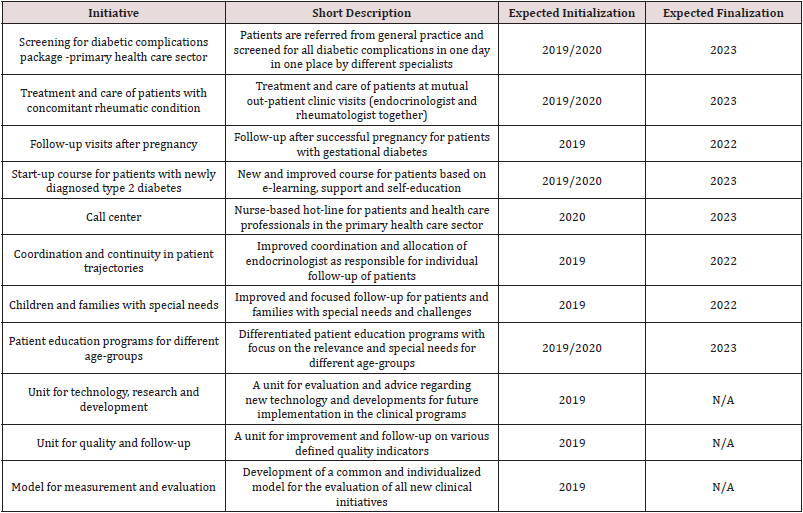
Adults with Diabetes: Table 1 gives an overview of the various clinical initiatives which have been planned, approved and initiated from 2018 until the present date at SDCO and, for some initiatives, at the partner hospitals in the Region of Southern Denmark.
Table 1: New approved clinical initiatives from the Steno Diabetes Center Odense for patients with diabetes from 2018-19 and status of implementation in the clinic.
lupinepublishers-openaccess-journal-diabetes-obesity
Extended Opening Hours: The extended opening hours late afternoon every week gives patients with full-time work the possibility to have appointments in the clinic outside their working hours. In this initiative there is also an option to have acute appointments at the out-patient clinic according to the need. Thus, patients with dysregulated diabetes or newly diagnosed patients without ketoacidosis admitted to the emergency ward, do have the option to have an appointment the following day at SDCO.
Diabetes Psychologist: The American Diabetes Association guidelines for the management of diabetes [4] recommend that psycho-social support should be an integrated part of diabetes care and should be offered. Some evidence support this notion, and that psychologic intervention can result in increased acceptance of the disease, optimized self-management and a reduced number of psychological barriers towards better disease control [5-7]. In this initiative, the psychology team will provide support to the other health care professionals at SDCO and its partner hospitals to improve their understanding and management of patients with psychologic challenges in relation to their diabetes. Further, to provide individual psychologic intervention to patients with psychologic problems and challenges in relation to their diabetes, and finally develop this psychologic program to patients.
Screening for Diabetic Complications Package: The screening for diabetic complications is traditionally offered on different appointments and by different specialists on different days. In this initiative screening for all complications is done at the same day in one location. Thus, the patient meets in the out-patient clinic at SDCO and have blood and urine samples taken, ECG (patients older than 65 years). Thereafter, the patient goes to the optometrist to have a fundus-photo and an optical coherence tomography taken. The pictures will be send to an ophthalmologist for immediate evaluation and description. The patient goes to the podiatrist to have a foot examination, counseling and risk evaluation. Finally the patient is seen by the endocrinologist, who takes care of collection and evaluation of all results, give advice, change or optimize the pharmacologic treatment if needed, and plan for future treatment and visits. The whole screening package takes approximately 2½ hours for the patient.
Screening and Treatment of Diabetic Autonomous Neuropathy: The prevalence and incidence of diabetic complication varies and is reduced by improving glycemic control in both type 1 and type 2 diabetes [8,9]. Autonomous neuropathy is related to the diabetes duration. In this initiative, patients with neuropathy and suspected gastroparesis is referred to a thorough and structured workup involving both the endocrinologist and gastroenterologist, and including both endoscopy and ventricular motility tests, before eventually treatment.
Screening and Treatment of Patients with Concomitant Renal Insufficiency: Patients with diabetes complicated with diabetic kidney disease have an increased morbidity and mortality. Optimal treatment of this group of patients seems to require a team-based management approach [10]. Evidence suggests that multidisciplinary consultations with an endocrinologist, nephrologist and diabetes nurse together may improve renal outcomes in these patients [11] and that increased focus on multifactorial intervention improves long-term renal outcomes [12]. In the future multidisciplinary out-patient clinic at SDCO, patients with an estimated glomerular filtration rate (eGFR) less than 30 ml/min, or between 30 and 40 ml/min and concomitant complications like acidosis, anemia, hypertension or calciumphosphate problems, will be referred to this team. Patients with progressive proteinuria will also have this opportunity.
Courses for Patients with Recurrent Ketoacidosis or Severe Hypoglycemia: Hypoglycemia is associated with an increased risk of hospital admission, falls and accidents in patients with diabetes. It can have significant physical and mental consequences and is the most important limiting factor in yielding and maintaining good glycemic control in patients with type 1 diabetes [13]. New technology such as continuous glucose monitoring systems (CGM) can have a significant effect of reducing severe hypoglycemia in patients, in particular patients with hypoglycemia unawareness. It seems that by combining CGM by focused and structured patient education do have the best outcome in minimizing the risk of severe hypoglycemia in patients with type 1 diabetes and hypoglycemia unawareness [14]. A multidisciplinary group-based patient education program with a diabetes nurse, endocrinologist, psychologist and dietician will educate and empower the patient to improve skills in order to prevent and avoid future severe hypoglycemic events. The family of the patient is included in this program, and the sessions will focus on: theory, fear of hypoglycemia, coping of unawareness, insulin adjustments, physical activity, carbohydrates and glucose sensors. These sessions can be combined with individual counseling.
Diabetes Screening and Assistance from Diabetes Team in Other Departments: Many patients admitted to the hospital for other somatic reasons such as cardiovascular disease, surgery, neurological disease and infectious diseases also have diabetes, particularly type 2 diabetes. Specialists and nurses at these departments do not always have the necessary skills and focus on care and treatment of patients with diabetes. Studies have shown that implementation of a specialized team of diabetes nurses supervised by an endocrinologist providing assistance to other departments at the hospital, can have a positive impact in reducing the length of hospitalization stay, and an increased satisfaction for both patient and health care professionals at the department [15- 17]. The aim of the initiative at SDCO is three-fold: optimization of care and treatment for all patients with diabetes admitted to the hospitals regardless of the department, a systematic opportunistic screening of patients with unknown diabetes by HbA1c, and to develop and improve the skills and competences in diabetes management of the health care professionals at all departments of the hospital. Thus, in all departments where an opportunistic screening for diabetes is considered relevant based on the characteristics of the population, all patients will at the time of admittance have a blood sample taken to be analyzed for HbA1c. In patients with unknown diabetes who have an increased HbA1c ≥ 48 mmol/mol, will have this re-tested and if confirmed, the specialized diabetes team will be involved to evaluate and manage the patient. The diabetes nurse will provide assistance to all patients with known diabetes where the department requests assistance and help in diabetes management. The team from SDCO will provide continuous training and regular theme-based courses for the health care professionals at these departments.
As an add-on to the above described initiative, a project including a clinical pharmacist intervention is considered. Recent studies suggest that a pharmacist-driven medication review, patient interview and follow-up in patients admitted to the acute admission ward may reduce the rate of readmissions and emergency department visits in these patients [18]. The proposed project is to include a clinical pharmacist to intervene in all in-patients who have significant pharmacologic treatment changes during the hospital admission. The intervention will include a medication review and evaluation, a patient motivational interview and follow-up with the primary health care sector after discharge from hospital.
Diabetes Screening and Assistance from Diabetes Team in Psychiatric Departments: The patients with diabetes and psychiatric co-morbidities constitute a particular challenge. Psychiatric patients have a two- to four-fold increased prevalence of diabetes and the metabolic syndrome compared to the general population. Patients with severe psychiatric diseases and diabetes have a significant increased mortality [19]. As previously described studies of admitted patients with somatic disease support the impact of a specialized diabetes team providing assistance to departments [15-17]. In this initiative, a specialized nurse-based diabetes team will provide assistance to health care professionals at the psychiatric departments and in the regional out-patient psychiatric clinics, in the management and care of patients with diabetes. As for the non-psychiatric departments, the team from SDCO will provide continuous training and regular theme-based courses for the health care professionals at the psychiatric departments. The diabetes nurse in this initiative will be supervised by an endocrinologist.
Advice before Pregnancy: Fertile women with diabetes have an increased risk of giving birth to a child with malformations and pregnancy complications if their glycemic control is not optimized before conception. Optimized glycemic control before and during pregnancy reduces the risk for diabetic complications, severe hypoglycemia, preterm delivery, macrosomia and malformations and neonatal hypoglycemia. In this initiative women with a wish of pregnancy in the near future and having either type 1 or type 2 diabetes and ethnicity other than Danish are offered a program with multidisciplinary advice covering adjustment of medicine, co-morbidity, goal of treatment, injection technique, blood glucose measurement, carbohydrate counting, vitamin supplements and complication screening. This program will be provided by the endocrinologist, diabetes nurse and dietician. In addition the women are offered a group-based program covering planning of pregnancy and follow-up during and after pregnancy.
Start-Up Course for Patients with Newly Diagnosed Type 1 Diabetes: For patients with type 1 diabetes previous studies show that intensively treated patients have a significant better long-term outcome with a reduced incidence of microvascular complications [9] and cardiovascular disease [20]. Many barriers towards optimized glycemic control can be identified such as risk and fear for hypoglycemia, insufficient knowledge of long-term consequences of the disease, acceptance problems and social challenges. Thus, it is of decisive importance that management of the patient with newly diagnosed type 1 diabetes is well-structured, thorough and individualized. At SDCO newly diagnosed type 1 diabetes patients will be followed in a 6 months ‘start-up package’ which will comprise a multidisciplinary team course and patient interviews, individualized and group-based, covering all elements of treatment, self-management and social significance for the patient and their relatives. The structured course will be supplemented by videos and e-learning to support empowerment and ‘living the good life with diabetes’ in these patients.

Preparation before Surgery

Patients with diabetes who are planned for surgery may have an increased risk of complications during or after surgery. Studies have shown that the risk of deep infections postoperatively is increased in patients with a high level of HbA1c [21], an increased risk of infections, infarctions and reduced survival is linked to perioperative hyperglycemia [22], and patients with an HbA1c above 70 mmol/mol who underwent cardiovascular surgery was found to have up to a four-fold risk of mortality [23]. A recent study found that initiating and optimizing basal insulin therapy in patients planned for cardiac surgery resulted in fewer infections postoperatively and a shorter hospitalization stay [24]. In this initiative, type 1 and type 2 diabetes patients treated with insulin are offered referral to SDCO for evaluation and optimization of insulin treatment before planned surgery. The patient will be evaluated by an endocrinologist, diabetes nurse and dietician at SDCO. Focus for evaluation, treatment and advice will be to: optimize insulin therapy and antihypertensive treatment if needed, patient advice regarding precautions related to diabetes management perioperatively, and an individualized diet plan if needed. Patients planned for orthopedic and gastrointestinal surgery will be included in this initiative.

Children and Adolescents with Diabetes

As listed in Table 1, the approved initiatives for children and adolescents with type 1 diabetes resembles those planned for adult patients with diabetes as previously described. The education programs, theme-based meetings and start-up courses will be adapted to the age-group (pre-school age, school-age below 15 years and school-age above 15 years) and adjusted to the special needs and challenges in these patients. The initiative concerning a diabetes psychologist will be distinctively different from the initiative for adults. Thus, it will comprise of systematic screening and evalulation of children and adolescents with diabetes, groupbased therapy if needed, intervention using the acceptance and commitment therapy (ACT) method, psycho-education sessions for patients and their families, and training and supervision to the health care professionals.
Planned Initiatives in Near Future at SDCO Awaiting Approval: The future initiatives in pipeline are listed on Table 2. The initiatives will cover both clinical and non-clinical initiatives and for both adults, children and adolescents with various forms of diabetes. The non-clinical initiatives are meant to support future management and treatment of patients, including the new clinical initiatives. Thus, a unit for the evaluation of new technology, research and development will guide the use of new technology to the right patients in order to benefit most patients taken costbenefit analyses into consideration as well. A unit for quality and follow-up will provide surveillance of key quality indicators of the patients treated at SDCO and of patients treated elsewhere in the Region of Southern Denmark, and will improve quality of patient management by providing data on the patient population and at the individual level. A mutual model for the evaluation of the above initiatives will be developed and described.
Table 2: Planned future clinical and non-clinical initiatives from the Steno Diabetes Center Odense for patients with diabetes.
lupinepublishers-openaccess-journal-diabetes-obesity
The future clinical initiatives await at present to be described in detail. These initiatives will elaborate and extend the already approved initiatives. Multidisciplinary out-patient clinics for patients with diabetes with concomitant rheumatic, cardiac, odontological disease and other chronic diseases are in pipeline. A package for screening of diabetes complications in one day is in pipeline covering type 2 diabetes patients who are followed in the primary health care sector by the primary health care provider, as well as extended follow-up of patients with former gestational diabetes after delivery, and a nurse-based call center for health care professionals and patients followed in the primary health care sector in the Region of Southern Denmark.
Cross-Sectorial Collaboration and Development of Competences and Skills: Hand-in-hand with the above described initiatives a thorough and structured cross-sectorial collaboration between SDCO, partner hospitals, communities and the primary health care providers is currently being developed and implemented. This includes a structured and ongoing training program and theme-based courses for all health care professionals who is taken care of patients with diabetes, in order to further develop and improve competences and skills.
Patient Involvement in the Organization and Clinical Decision-Making at SDCO: Involvement of patients with diabetes and their relatives are considered important at SDCO. It is assumed that involvement in the clinical process can facilitate transformation of knowledge and improve empowerment provided by the health care professionals. Further, the diabetes educators and health care professionals can better adapt and target education, treatment and care to the needs and resources of the individual patient. User involvement at SDCO will focus on both organization (patient board, committees, involvement in new developments etc.), and on individual patient care. Thus, involvement is planned widespread on different relevant areas as: standard patient care, new clinical initiatives, cross-sectorial collaboration, development of competences and skills and clinical research. A patient committee consisting of 15 diabetes patients and relatives of different age, gender, diabetes type, social and educational background has been established. The main purpose with this patient committee is to collaborate with and give advice to the management and health care professionals at the center concerning the future strategy. This in order to ensure that current activities and new clinical initiatives are in agreement with the needs and wishes from patients with diabetes, their relatives and families in the future.

Summary and Conclusions


The overall vision of the new initiatives originating from Steno Diabetes Center Odense and by potential dissemination to the whole Region of Southern Denmark embracing both the primary and secondary health care sector, is to normalize lifetime expectancy and quality of life in people with diabetes. By improving all areas of diabetes management, treatment, care and patient selfcare, it may be possible to avoid or minimize future complications in patients with diabetes irrespective of type of diabetes or concomitant disease. The new and forthcoming clinical and non-clinical initiatives will potentially help to fulfil this goal.


For more Lupine Publishers Open Access Journals Please visit our website:
http://lupinepublishers.us/

To Know More About Open Access Publishers Please Click on Lupine Publishers


Follow on Twitter   :  https://twitter.com/lupine_online

Wednesday, November 20, 2019

Lupine Publishers| A Note on the Application of Discriminant Analysis in Medical Research

Diabetes and Obesity Open access Journals- Lupine Publishers

Introduction

The social aspects of medical research and research in life science deal with data collected from randomly selected investigating units either by direct interview or by doing some controlled experiments. The objective of investigation is to verify the existence of some pre-assumed hypothesis and belief. Whatever be the objective of the research, the study is done using the collected data, where the data are either categorical or numerical or both. There are many advanced statistical methods [1] to handle the data, especially if the data are numerical. Limited number of methods of analysis is there to handle the categorical data. But proper statistical methods are to be applied to study the unknown characteristics in the population. Once the technique of analysis is identified, the analysis can be done using any one of the Statistical Packages available for the analysis. The major source of data in the field of life science and medical science is related to public health and the main aspect of analysis is to suggest ways and means to improve the health status of the public by controlling the diseases which are fatal as well as causes of health hazard in the society. Any type of health hazard is the cause of economic and social problems for the country as well as for the family. Thus, the health planners need the proper analytical findings to formulate the guidelines so that the health hazard is reduced to a great extent. The data are collected from each and every investigating unit.
Some of the data are age, height, weight, level of education, occupation, income, marital status, type of work, food habit, smoking habit, prevalence of obesity, diabetes, hypertension, etc. The prevalence of obesity is the cause of non-communicable diseases like diabetes and hypertension and the sources of these two are occupation, work type, food habit, smoking habit. There may be other sources of diseases. But the sources mentioned here are categorical (qualitative) variable. The quantitative variable income, age, weight, etc. are also the sources of non-communicable diseases [2]. The data mentioned above are the multivariate data. The analytical procedures of these data are different, and the procedures are broadly classified as
a)Dependence Analysis
b)Interdependence Analysis.
One of the techniques of dependence analysis is the Discriminant Analysis. This analysis is used to discriminate the investigated units according to some categorical variable and to identify the most responsible variable(s) for the discrimination. Accordingly, the health planners can suggest the ways and means so that proper action can be taken to control the sources responsible for the health hazard in the society.
Discriminant Analysis
Let xij be the i-th variable observed from j-th category of units [ i = 1, 2, ……..p ; j= 1, 2, …., k], where
Lupinepublishers-openaccess-journal-diabetes-obesity
Sj = Variance- Covariance matrix of (xi j) , Su = Combined variance- covariance matrix, where
Su = Σ nj Sj / ( n – k ). Here nj = number of observation in j- th category, n = Σ nj.
The k category of units can be discriminated by
a)ML Method of Discrimination
b)Bayes Discriminant Rule and
c)Fisher’s Discriminant Rule.
The ML method of discrimination needs to calculate the following statistic
Lupinepublishers-openaccess-journal-diabetes-obesity
where j ≠ k.If we consider that k = 3, then there exists linear relationship of the type
D12 + D23 = D13.
In such a situation the value of x will be allocated to a population as per the rule discussed below:
a) If D12>0 and D13>0, allocate x to the population -1
b) If D12<0 and D13>0, allocate x to the population -2
c) If D12<0 and D13<0, allocate x to the population -3.
The discriminant analysis is meaningful if the k mean vectors of variables are heterogeneous. For the analysis a model is considered when there are k = 2 groups, where the model is
D = B0 +B1 x1 + B2 x2 + …………. + Bp xp
Here Bi (i = 1, 2, ….,p) is the discriminant coefficient of the variable xi . The interpretation of these coefficients are closely follows the logic of multiple regression. The value Bi indicates the importance of the variable xi in discriminating between the two groups. For k=3 groups problem, one function is considered to discriminate between first group and combined second and third group. Another function is considered to discriminate between second and third group. The number of discriminant functions are (k – 1) if their k groups. In that case the interpretation of coefficients is made for each function separately. The coefficients are available using Statistical Packages. D is the discriminant score for different values of x when k=2. The correlation coefficient of discriminant score and the variable is used to decide an important variable for discrimination. The highest correlation coefficient indicates the most important variable for discrimination. Different functions may identify different important variables for discrimination.

Some Results of Discriminant Analysis

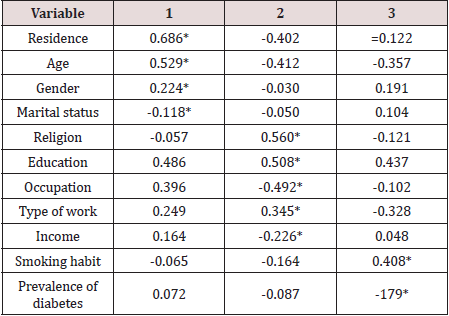
The following Discriminant Analysis was done [3] to discriminate 900 randomly selected adults of Bangladesh classified by levels of obesity. It was observed that levels of obesity were varied differently with the variation of different social factors. Thus, there were in search of identification of most important variables to discriminate the respondents according to various of levels of obesity. This was done by discriminant analysis. The analysis helps to identify the important variables for which the groups of respondents were significantly different [4]. The variables which were included in the analysis were sufficient to discriminate the different groups of respondents according to their level of obesity as Box’s M = 287.926 and the corresponding F= 1.403 with p –value = 0.000. The analysis provided 3 discriminant functions for 4 groups of respondents. The first function was significant as values of Wilk’s ∧ for first, second and third functions were 0.918, 0.973 and 0.994, respectively and the corresponding x2 values were 75.920( p-value=0.0000, 24.493 ( p-value=0.222) and 5.065 (p-value=0.829). The standardized canonical discriminant function coefficients were presented in Table 1. From the discriminant analysis the correlation coefficients of variables and the discriminant functions scores were calculated. These coefficients were shown in Table 2. The analysis indicated that the respondents of different levels of obesity were significantly different according to socio-demographic variables. The important variable for discrimination was residence followed by age. The other important variables were gender and marital status.
Table 1: Coefficients of functions.
lupinepublishers-openaccess-journal-diabetes-obesity
Table 2: Pooled within group correlations between discriminating variables and standardized discriminant function.
lupinepublishers-openaccess-journal-diabetes-obesity
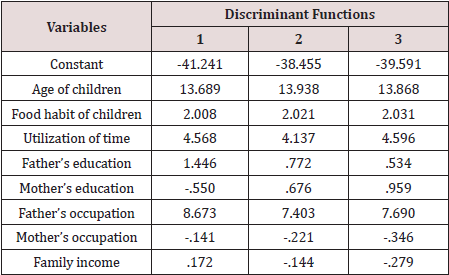
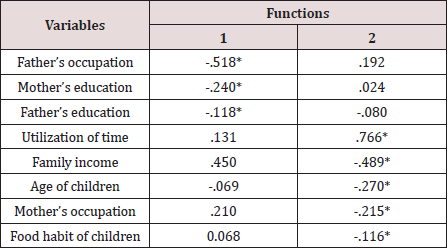
As a second example of discriminant analysis, 662 children and adolescents of some randomly selected affluent families were classified by their level of obesity [5]. There were 4 groups of respondents and for these 4 groups the variables age of the children, food habit of children, utilization of time by the children, father’s education, mother’s education, father’s occupation, mother’s occupation and family income were different and most of them were associated with the level of obesity. Therefore, these variables were included to discriminate the children. For 4 groups of children 3 Fisher’s linear discriminant functions were available. The coefficients of these functions for different variables were shown in Table 3. First function explained 92.7% variation of the children’s level of obesity and most important variable to explain this variation is father’s occupation followed by mother’s education and father’s education. This phenomenon was observed from pooled within groups correlations between discriminating variables and standardized canonical discriminant functions. The results of this pooled within groups correlations were given in Table 4. The most important variables identified by functions were shown by given asterix. Since first functions explained 92.7% variation in level of obesity and this function was statistically significant [ Wilk’s Lamda=0.834, Chi-square =97.811, p-value=0.000], the pooled within groups correlations were shown for this first function. Some variables were also found important by second function to discriminate children by level of obesity. However, the 2nd and 3rd functions were not statistically significant and the pooled within groups correlations of variables and 3rd function were not shown.
Table 3: Discriminant coefficients of different variables: (. Indicates significant correlation).
lupinepublishers-openaccess-journal-diabetes-obesity
Table 4: Correlation coefficients of variables with discriminant score.
lupinepublishers-openaccess-journal-diabetes-obesity
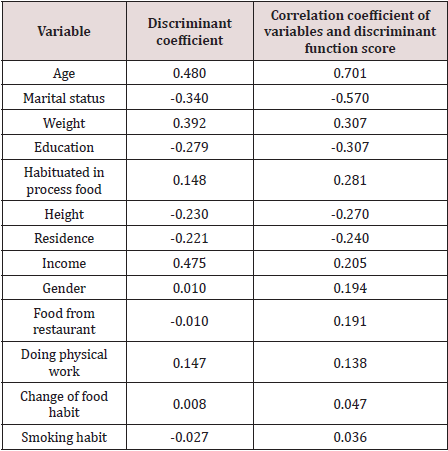
As a third example, let us present the results of discriminant analysis when discrimination was done according to the prevalence of non-communicable diseases [NCDs]. A group of adults of Bangladesh was investigated [2] to identify the responsible variable for the prevalence of NCDs. The data were recorded from randomly selected 785 adult people of Bangladesh. Among them, 49.4 percent were affected by at least one of the NCDs. The two groups of respondents were discriminated to identify the factors responsible for discrimination. The analysis indicated that the variables age, followed by marital status and weight were the most important variables in discriminating the two groups of respondents. The analytical results were presented in Table 5. As a fourth example, let us discuss the discrimination of students of public and private universities in respect of some social characters. The number of investigated students were 893 from private universities and 119 from public universities [6].
Table 5: Coefficient of discriminant function and pooled within groups correlation between variables and discriminant function score.
lupinepublishers-openaccess-journal-diabetes-obesity
As there were two groups of students, viz. students of public university and students of private university, one discriminant function was derived. The function was

D =-0.041+0.551x1 -0.784x2+0.455x3- 0.633x4+0.080x5+0.057x6+0.121x7-0.004x8+0.631x9

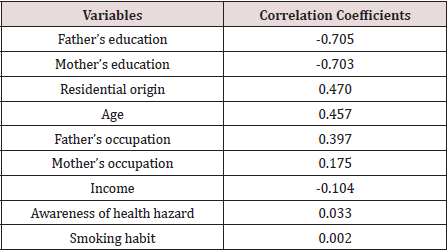
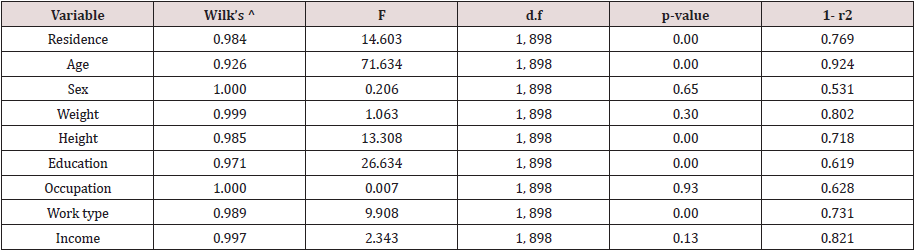
This function was significant as Wilks Lambda is 0.773 [χ2= 258.758, p=0.000, Bartlett (1947)] and it indicated that the students of private and public universities were significantly different in respect of some of the socioeconomic characteristics. The important socioeconomic characteristics were identified by the canonical correlation coefficients of the variables and the discriminant score. The correlation coefficients are shown in Table 6 in descending order of magnitude. It is seen that father’s education is very important social factor to discriminate between student of private and public universities followed by mother’s education, residential origin and age of students. As a fifth example, let us discuss the discrimination of 900 randomly selected adults of Bangladesh [7] in respect of the prevalence of diabetes. There were two groups of respondents, one group of 635 diabetic patients and another group of 235 normal respondents. In doing the discriminant analysis, there was an attempt to decide the inclusion of variables in the discriminant analysis. For this the value 1- r2 was calculated and was shown in Table 7. Here r is the multiple correlation coefficient when one variable was considered as dependent variable and others as independent variable. None of these calculated values was low and hence all the nine variables were included in the analysis.
Table 6: Correlation coefficient between variables and discriminant score in descending order of magnitude.
lupinepublishers-openaccess-journal-diabetes-obesity
Table 7: Results showing the importance of inclusion of variable in the discriminant analysis.
lupinepublishers-openaccess-journal-diabetes-obesity
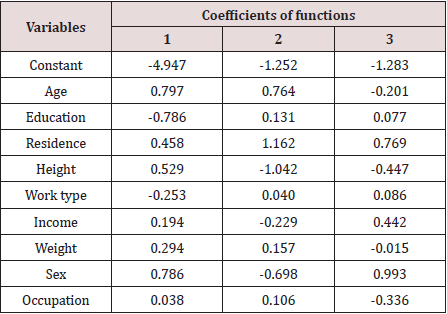
The discriminant coefficients were shown in Table 8 below. The results indicated that the variable residence had the highest discriminating power followed by work type, income and age. The importance of the variables was also observed from the study of the correlation coefficients of the variables with discriminant score. The correlation coefficients in descending order were shown below in Table 9. The function was found highly significant by Bartlett’s test (p<0.001). The test indicates that diabetic and non-diabetic respondents were significantly different. The important variable for discrimination was age followed by education and residence. This result was observed from the study of correlation coefficient of the variables and discriminant score. The same of respondents were also discriminated by the type of disease. The total diabetic patients were classified in to four classes, viz. patients of type I, type II, type III diabetes and another group of 269 patients who were ignorant about their type of diabetes. In the first three groups the number of patients were 136, 215 and 19 respectively.
Table 8: Discriminant coefficients of different variables.
lupinepublishers-openaccess-journal-diabetes-obesity
Table 9: Correlation coefficients with discriminant score.
lupinepublishers-openaccess-journal-diabetes-obesity
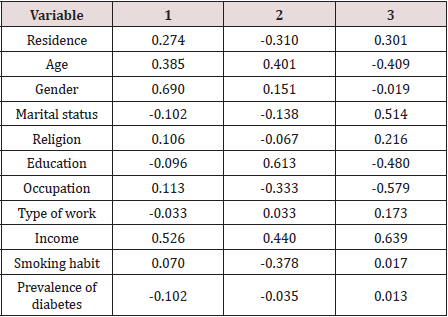
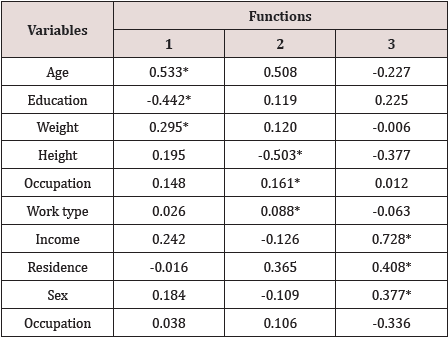
Thus, the patients were classified into 4 groups and identified the groups by 1, 2, 3 and 4 respectively. The multivariate analysis of variance showed that the mean vectors of four groups of patients by type were significantly different (Wilk’s ^ = 0.891, F= 2.715, p ≤ 0.01The discriminant analysis also showed that the 3 discriminant functions were significantly different ( p ≤ 0.01). The results were shown in Table 10. The pooled within- groups correlations between discriminating variables and the standardized canonical discriminant functions were shown in Table 11. The first function discriminated well among groups of patients and the variables age and education were important to discriminate among patients of different types of diabetes. The second function discriminated well and the important variables for discrimination were occupation and work type. The third function discriminated well among different groups of patients of different types and the variables income, residence and sex were very important to discriminate well.
Table 10: Discriminant coefficients of different variables.
lupinepublishers-openaccess-journal-diabetes-obesity
Table 11: Correlation coefficients with discriminant score.
lupinepublishers-openaccess-journal-diabetes-obesity


For more Lupine Publishers Open access journals please visit our website
For more Diabetes open access journal please click here

Lupine Publishers| Semaglutide versus liraglutide for treatment of obesity

  Lupine Publishers| Journal of Diabetes and Obesity Abstract Background: Once weekly (OW) semaglutide is a glucagon-like peptide...